Unlike many coastal destinations, Madeira's seabed drops steeply just offshore, allowing deep-ocean species to live surprisingly close to land.
Whales & Dolphins You Can See in Madeira: Complete Species Guide
Madeira is one of the few places in Europe where whale watching is possible throughout the year. The island sits beside deep Atlantic waters that attract both resident and migratory cetaceans, making it possible to spot dolphins and whales in every season. While sightings always depend on nature, Madeira's waters are home to nearly 30 recorded cetacean species, including sperm whales, short-finned pilot whales, bottlenose dolphins, Bryde's whales, and Atlantic spotted dolphins. Whether you're joining a whale watching tour from Funchal or Calheta, knowing which species are most active each season helps you choose the best time to go.
Planning a tour? Read our complete Whale Watching in Madeira Guide for ticket options, departure points, and what to expect on board.
Whales and dolphins you're most likely to see in Madeira
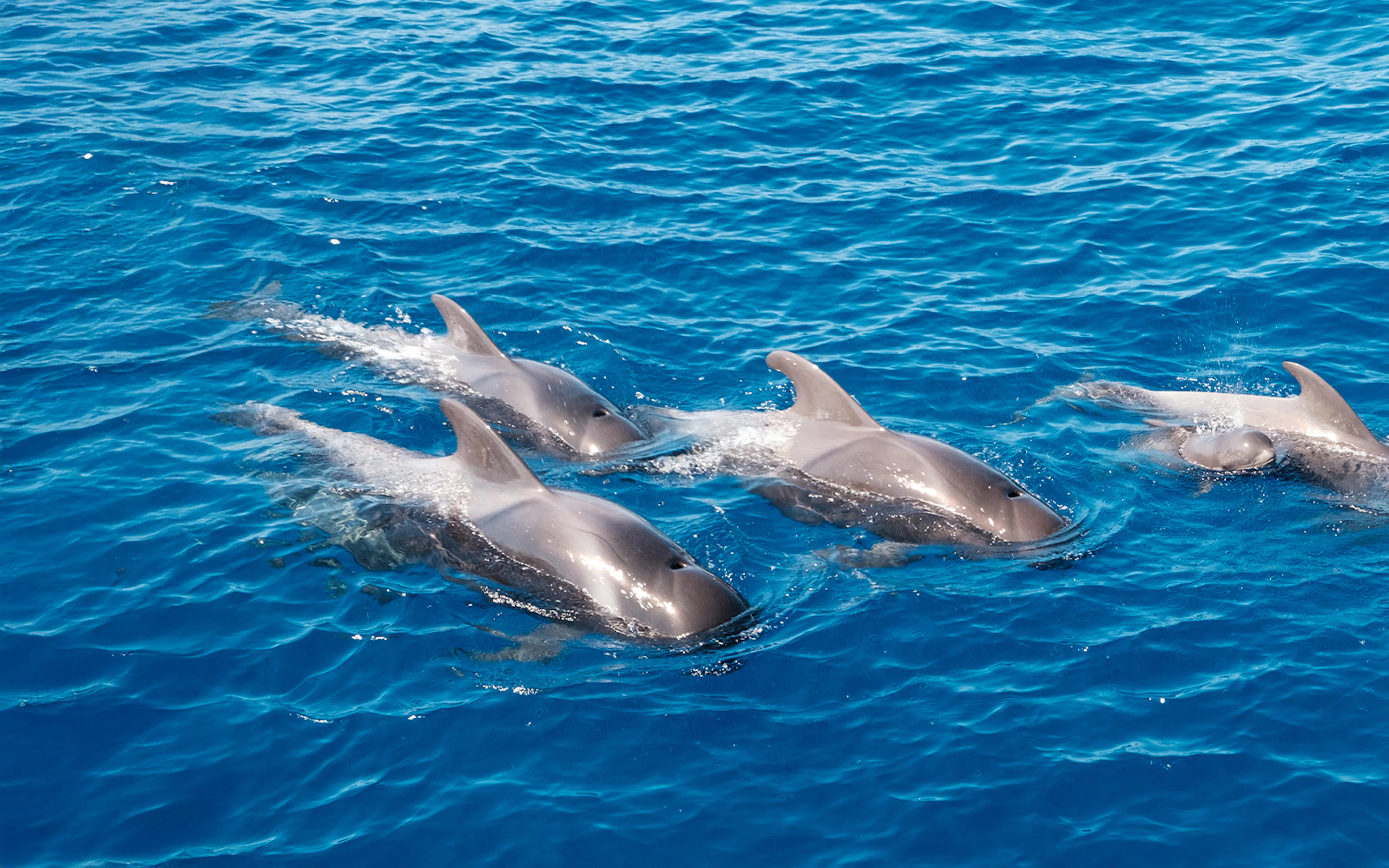
1/7
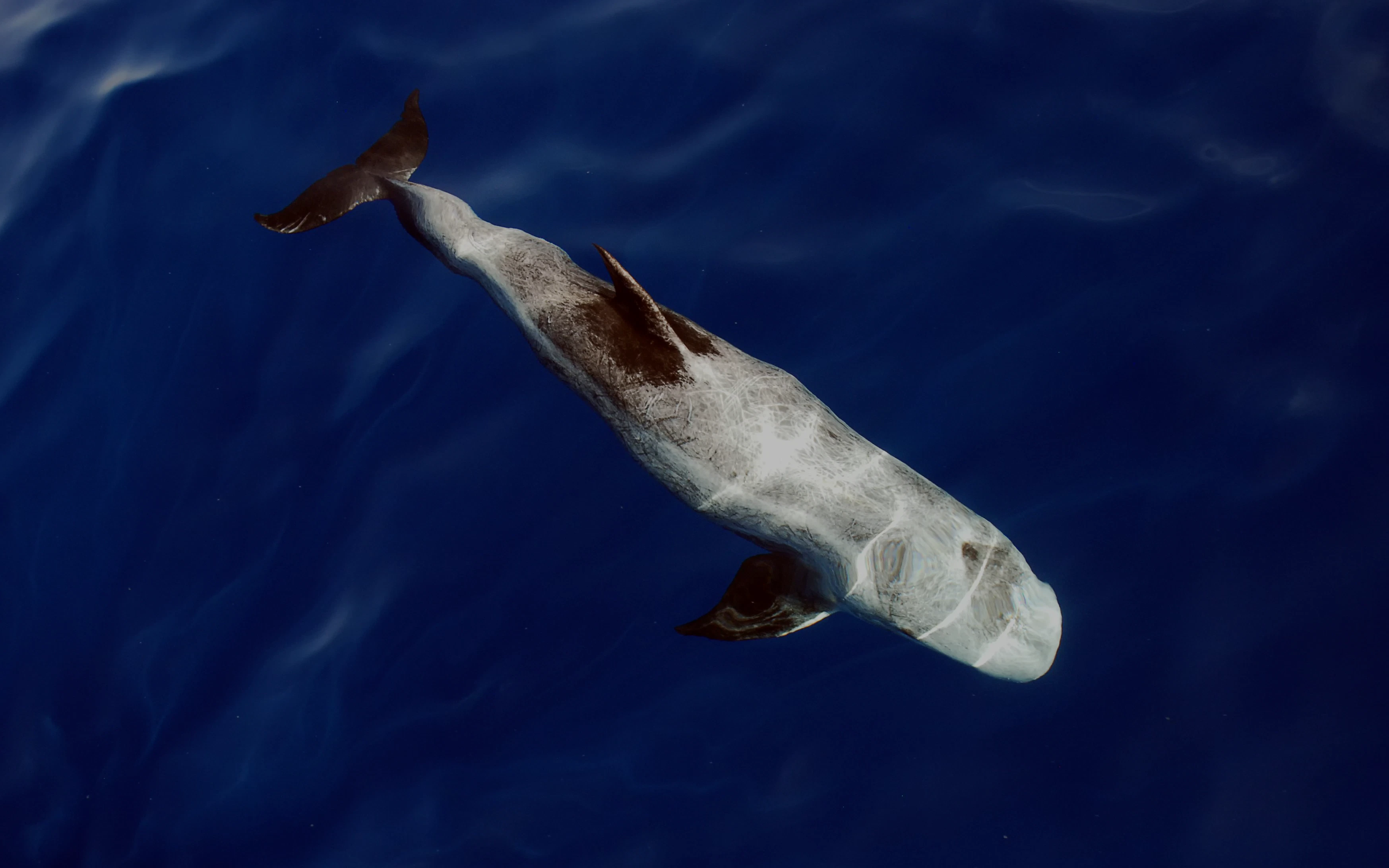
Short-finned pilot whale
The short-finned pilot whale is Madeira's signature whale species and one of the easiest whales to spot during a tour. These highly social whales travel in close family pods and often spend long periods resting near the surface.
How to identify a pilot whale
- Rounded, bulb-shaped forehead.
- Dark grey or black body.
- Tall, curved dorsal fin.
- Usually seen in groups rather than alone.
Interesting fact: Pilot whale pods can include dozens of individuals travelling and communicating together.
Bottlenose dolphin
Bottlenose dolphins are Madeira's best-known resident dolphins and are famous for swimming alongside boats.
How to identify a bottlenose dolphin
- Curved dorsal fin.
- Grey back with a lighter belly.
- Short, rounded snout.
- Often rides the bow waves of boats.
Interesting fact: Bottlenose dolphins live in stable communities and are among the most intelligent marine mammals.
Sperm whale
The sperm whale is the largest toothed whale in the world and one of Madeira's biggest wildlife highlights. Thanks to the island's deep offshore waters, sperm whales can hunt squid close to the coastline.
How to identify a sperm whale
- Massive square-shaped head.
- Small dorsal hump instead of a prominent fin.
- Wide, angled blow that points slightly forward.
- Long dives after lifting its tail fluke above the water.
Interesting fact: Sperm whales can dive more than 1,000 metres below the ocean's surface in search of prey.
Atlantic spotted dolphin
One of Madeira's most playful dolphin species, Atlantic spotted dolphins are known for energetic leaps and spins.
How to identify an Atlantic spotted dolphin
- White spots appear as adults mature.
- Slim body with a long beak.
- Frequently jumps and spins above the water.
Interesting fact: Young spotted dolphins are born without spots and gradually develop them as they age.
Bryde's whale
Bryde's whales are sleek baleen whales that prefer warmer Atlantic waters and regularly visit Madeira during the warmer months.
How to identify a Bryde's whale
- Long, streamlined body.
- Three distinct ridges on top of the head.
- Short, pointed dorsal fin.
- Surfaces quickly and repeatedly while feeding.
Interesting fact: Bryde's whales often feed close to the surface, making them easier to observe than some other baleen whales.
Striped dolphin
Striped dolphins are fast swimmers that often travel in large offshore pods.
How to identify a striped dolphin
- Blue-grey body.
- Dark stripe running from the eye toward the tail.
- Long, slender beak.
- Active jumping behaviour.
Interesting fact: Striped dolphins can travel at speeds of up to 35 km/h.
Common dolphin
Despite its name, the common dolphin is a seasonal visitor rather than Madeira's most common dolphin species.
How to identify a common dolphin
- Distinctive hourglass-shaped yellow and grey markings.
- Slender body.
- Long beak.
- Frequently travels in large pods.
Interesting fact: Common dolphins are incredibly social and are often seen feeding together.
Rare whales and dolphins found in Madeira
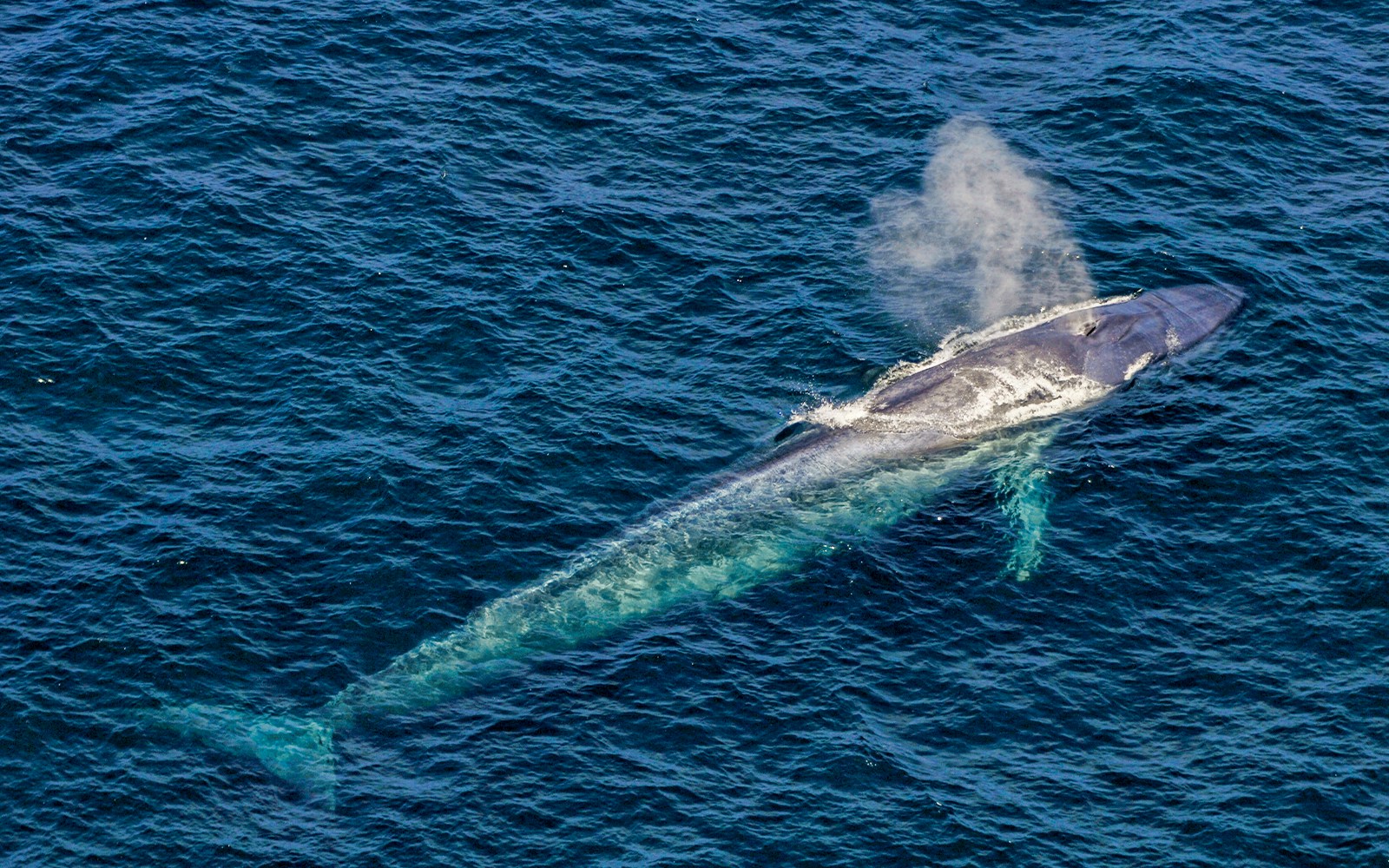
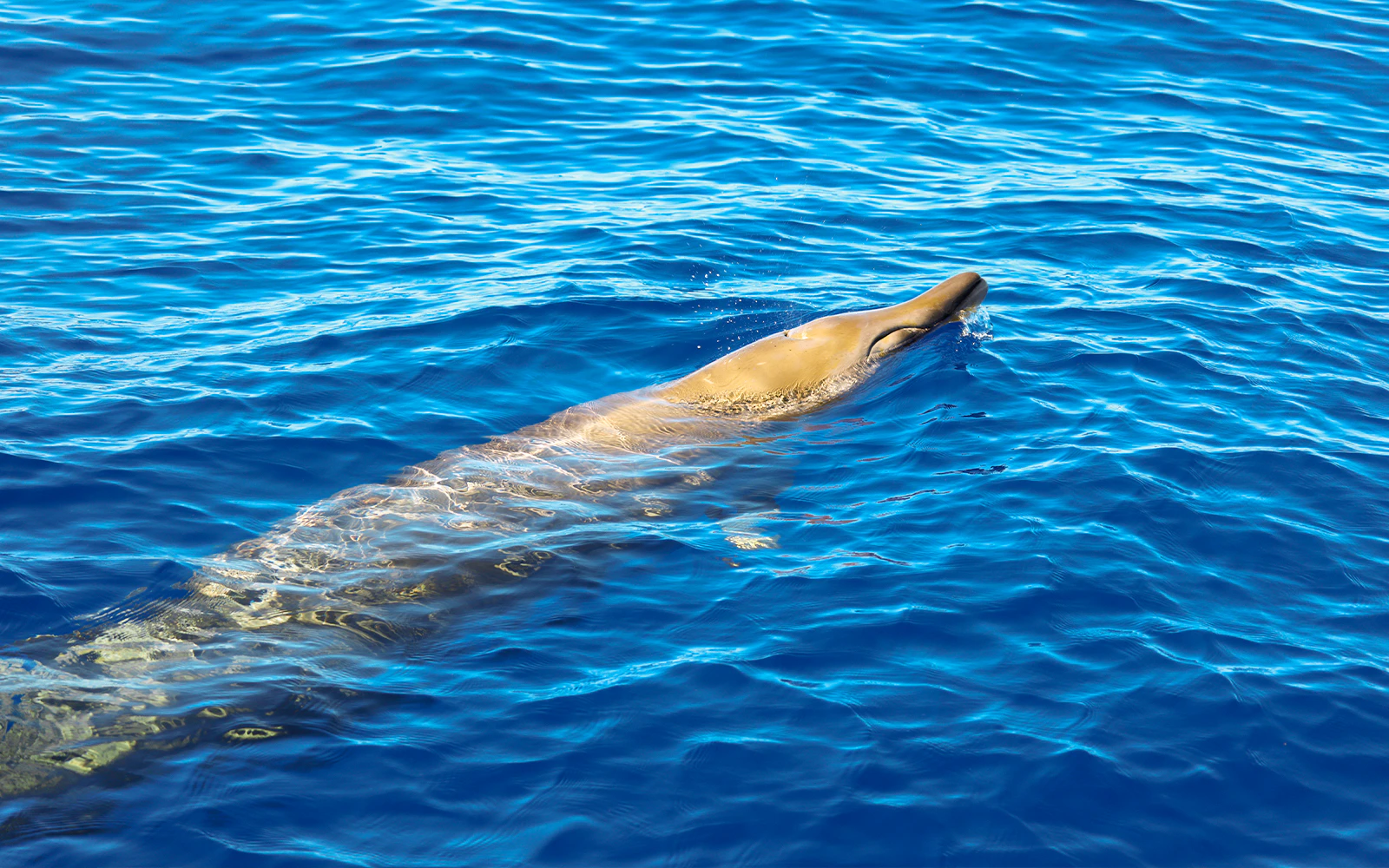
Fin whale
The second-largest whale on Earth and an occasional migratory visitor.
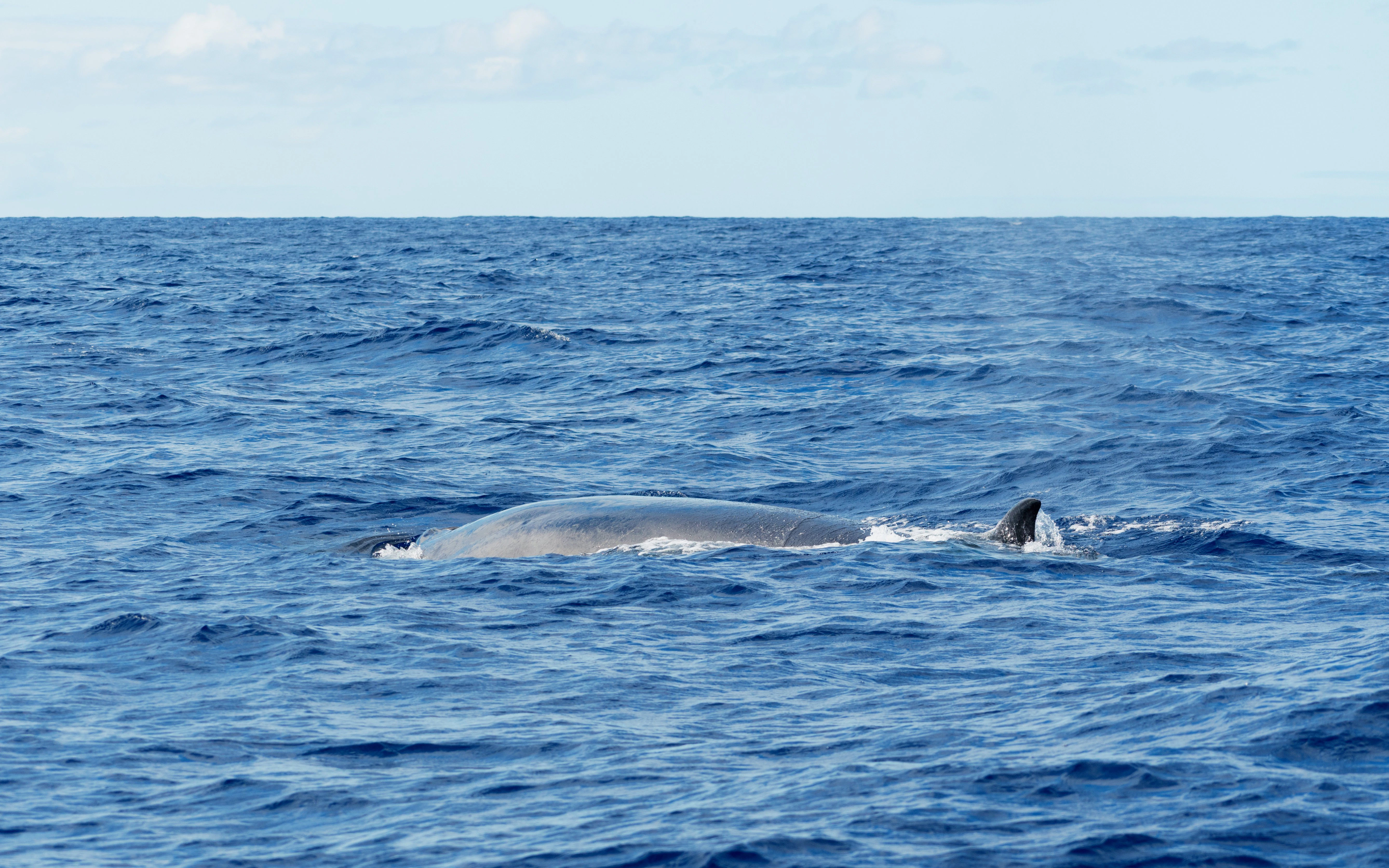
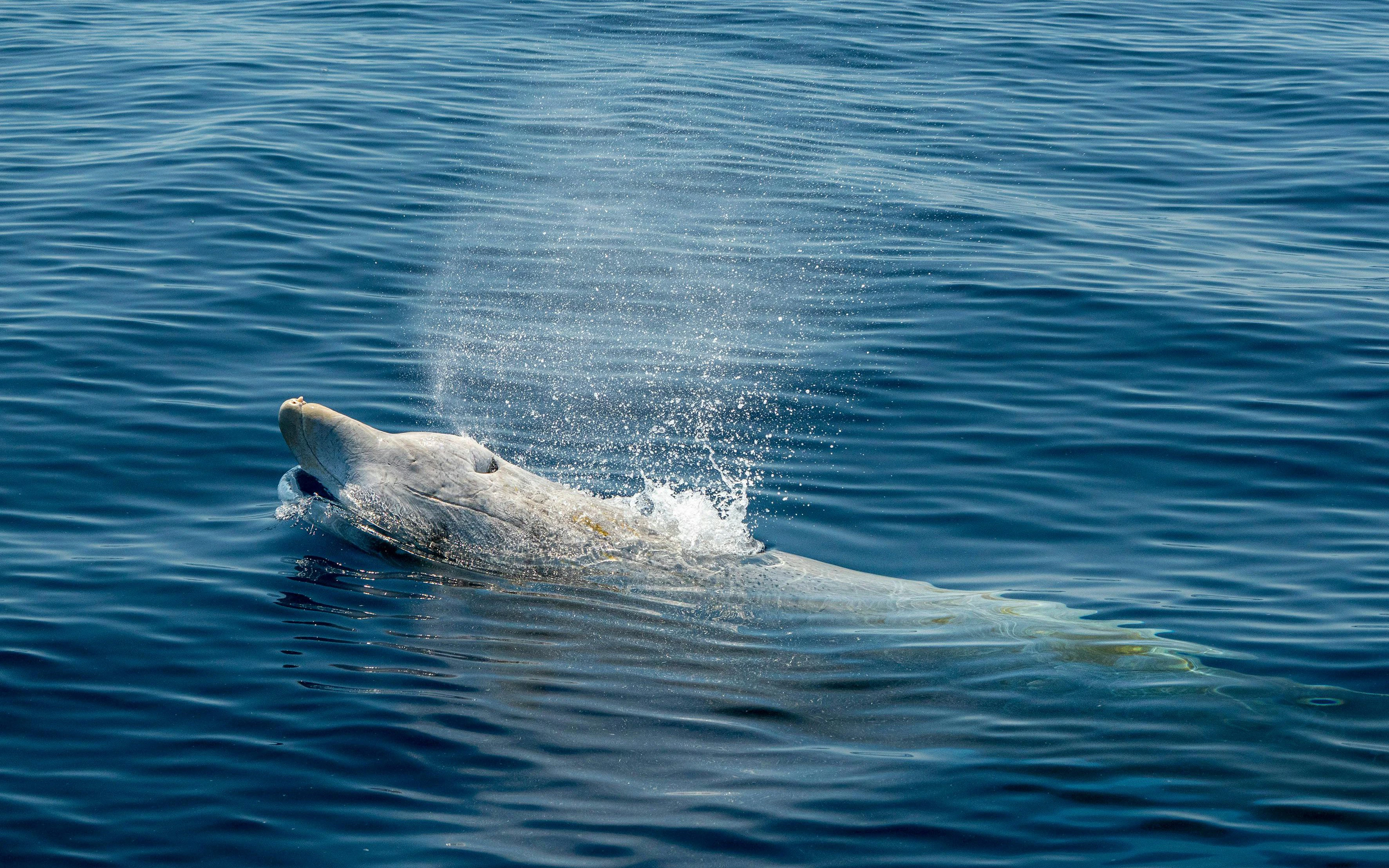
Why Madeira is one of Europe's best places for whale watching
Madeira's geography makes it an exceptional place to see whales and dolphins in the wild.
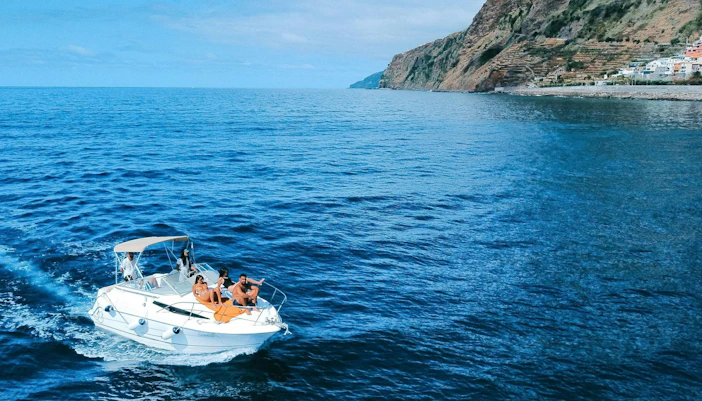
Deep Atlantic waters close to the coast
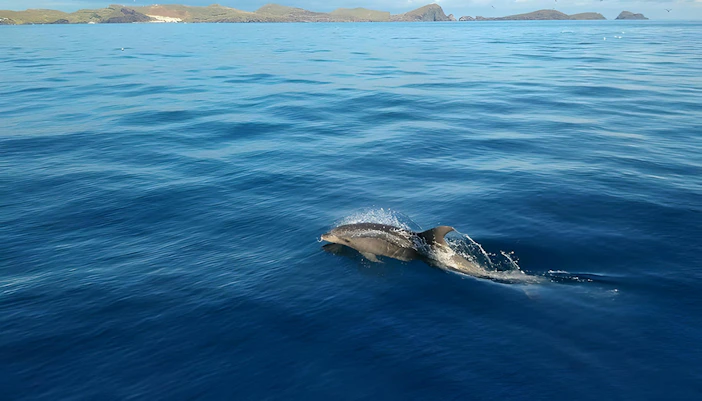
Resident and migratory species
Some whales and dolphins remain around Madeira year-round, while migratory species pass through during different times of the year, making sightings possible in every season.
Rich marine ecosystem
Warm Atlantic currents and abundant marine life create an important habitat for whales, dolphins, turtles, and seabirds throughout the archipelago.
How to be a responsible whale watcher in Madeira
Whale watching is about observing marine life without disturbing it. A few simple practices help protect Madeira's whales and dolphins while ensuring everyone has a better wildlife experience.
Follow these responsible whale watching tips during your tour
- Keep a respectful distance and avoid trying to touch or attract whales and dolphins.
- Stay quiet during wildlife sightings so you don't disturb the animals.
- Never throw food or any objects into the sea.
- Follow the crew's instructions during sightings and while moving around the boat.
- Avoid using flash photography when animals are close to the boat.
- Be patient and let wildlife approach naturally if it chooses to.
Responsible whale watching helps protect Madeira's marine ecosystem and ensures these animals continue to thrive in their natural habitat for future visitors.
Frequently asked questions about whales & dolphins in Madeira
Nearly 30 species of whales, dolphins, and porpoises have been recorded in Madeira's waters, making it one of Europe's richest cetacean habitats.
Whales and dolphins are wild animals, so sightings can never be guaranteed on every tour. However, the Funchal Small-Group Speedboat Dolphin & Whale Watching tour includes a 100% cetacean sighting guarantee. If you don't spot a whale or dolphin during the tour, you'll receive a free return trip or a voucher to use on a future tour, subject to availability.
The short-finned pilot whale is one of the species most frequently spotted during whale watching tours.
Bottlenose dolphins are the most commonly seen resident dolphins around Madeira.
Yes. Many whale watching tours in Madeira encounter both whales and dolphins during the same trip, although sightings vary each day.


